Shopper Skepticism Is Quietly Capping Your CVR. Immi’s Founder Named the Fix.




Kevin Lee, co-founder of Immi, said something recently that every DTC health brand operator should hear: “FrontrowMD’s medical badge is critical to strengthening the claims Immi makes about the benefits of our product, particularly during this heightened period of skepticism.” That last phrase — heightened period of skepticism — isn’t marketing language. It’s a diagnosis of the market condition every health brand is navigating right now.
McKinsey’s consumer health research calls it healthwashing: the growing awareness among shoppers that brands routinely position products as healthier than they actually are. When every product on the shelf claims to be “clinician-formulated” or “backed by science,” the claims themselves lose meaning. What replaces them is something brands can’t fake — verifiable validation that real medical professionals have chosen to share the product.
Why Is Ramen Facing a Credibility Problem?
Immi sells high-protein, high-fiber ramen. The nutritional profile is impressive — 28g of protein per serving — but the brand faces a fundamental perception challenge: convincing shoppers that ramen can actually be healthy. For early adopters, the ingredient list was enough. For the next wave of buyers, the ones who drive scale, that claim triggers immediate skepticism. They’ve seen too many “healthy” versions of comfort food that turned out to be neither healthy nor satisfying.
Kevin recognized that the gap between Immi’s claims and shoppers’ willingness to believe those claims was the single biggest conversion barrier — bigger than price, bigger than taste concerns, bigger than competition.
How Did Independent Clinician Validation Change the Equation?
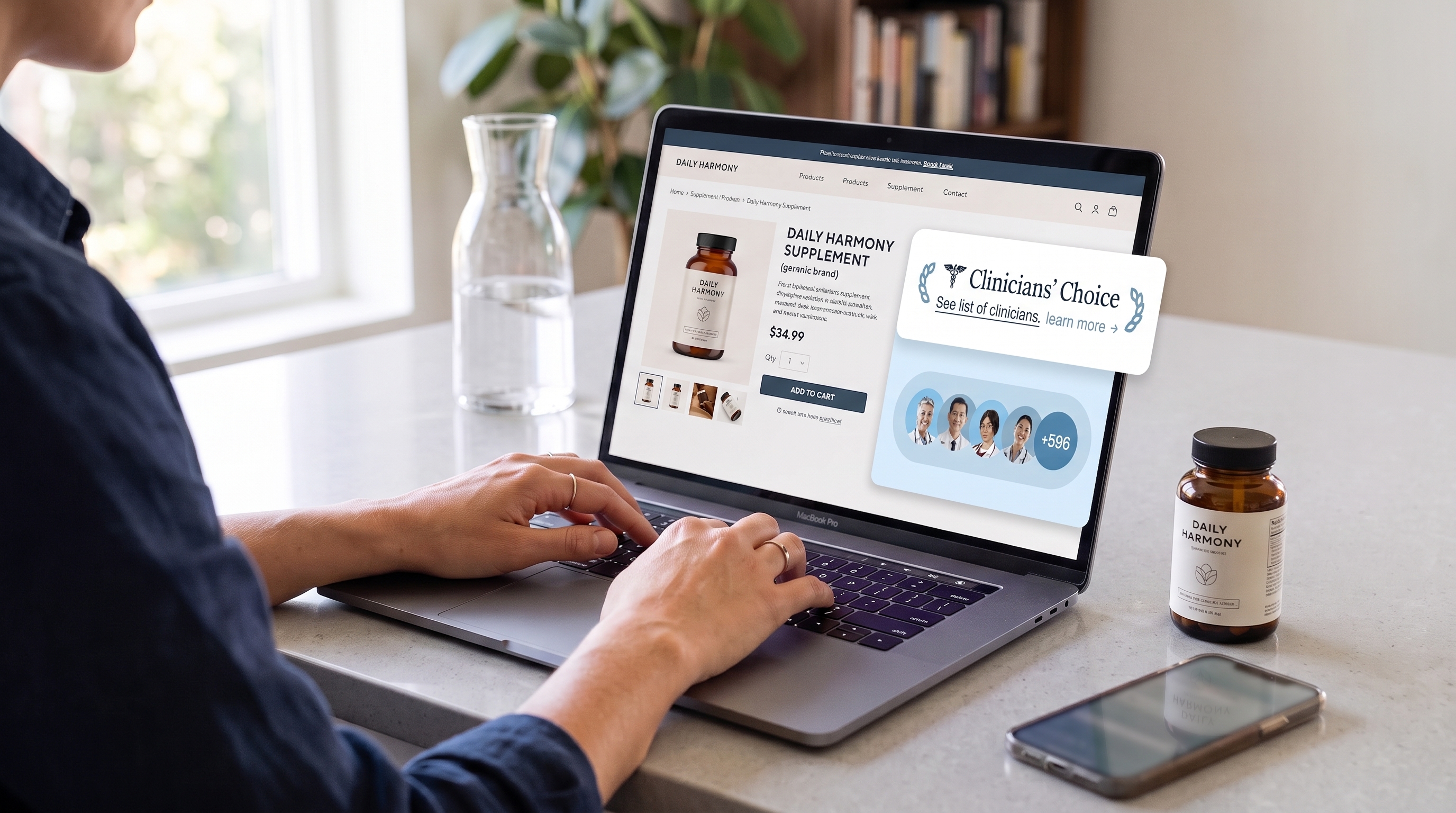
The solution wasn’t more marketing. It was adding a layer of trust that exists outside the brand’s control. When shoppers land on Immi’s product page, they see the Clinicians’ Choice badge — proof that thousands of licensed, independent clinicians have chosen to share this product with their patients, without compensation. That signal does something no ad or influencer can do: it shifts the credibility from the brand’s own claims to third-party medical experts with nothing to gain from the endorsement.
FrontrowMD is a clinician validation platform connecting DTC health, wellness, supplement, and beauty brands with thousands of licensed clinicians (MDs, NPs, PAs) who share, review, and endorse products — uncompensated — through patient-facing discount pages.
What Makes This Different From Influencer Partnerships?
The distinction matters more than most brands realize. A Maveron survey of wellness buyers found that shoppers are increasingly aware of paid incentives in influencer marketing — and they discount the recommendation accordingly. Clinician validation through FrontrowMD works on the opposite principle: the clinicians are never paid. Their endorsement carries weight precisely because there’s no financial motive behind it.
The Broader Shift in Functional Food
Immi isn’t an isolated case. Functional food and beverage is one of the fastest-growing categories adopting clinician validation. The pattern is consistent: brands with genuinely strong formulations struggle to differentiate from brands making hollow claims. Clinician validation becomes the mechanism that separates the two — not through marketing spend, but through medical professionals voluntarily standing behind the product.
.png)

Frequently Asked Questions
