70% of Supplement Shoppers Say Paid Doctor Endorsements Are the #1 Reason They’d Distrust a Review




If your brand pays a doctor to endorse your supplement, nearly 70% of your target customers will trust you less, not more. That’s the finding from an independent survey of 322 verified supplement buyers. When asked what would destroy their trust in a clinician’s product review, the number-one answer — at 69.57% — was learning the clinician was paid by the brand.
Not a lack of credentials. Not a poorly written review. Not even a mismatch of specialty. The single biggest trust killer is financial compensation from the brand. That is a direct repudiation of the paid medical advisory board model, the clinician-influencer partnership, and any arrangement where the brand is writing a check to the person evaluating its products.
What Do Shoppers Actually Want From a Clinician Review?
The survey reveals a precise model of what credible clinician validation looks like. The number-one trust builder, cited by 62% of respondents, is the clinician disclosing that they have no financial relationship with the brand. After that: specific references to clinical studies (53%), verified and displayed credentials (38%), explaining who the product is and is not right for (38%), multiple clinicians reviewing the same product (31%), and addressing potential side effects (23%).
Read those two lists side by side — what destroys trust and what builds it — and a very specific model emerges. Consumers want reviews from clinicians who are not paid by the brand, whose credentials they can verify, who reference real evidence, who are honest about limitations, and who are willing to say a product is not right for certain people. They want multiple clinicians, not a single spokesperson.
Why Are Paid Advisory Boards Working Against You?
For brands that have invested in paid medical advisory boards or clinician-influencer relationships, the data delivers an uncomfortable truth: the model consumers trust most is the precise opposite of the model most brands are using. Every dollar spent on a paid doctor endorsement is a dollar spent on a credibility structure that the majority of your target consumers have been trained to see through and reject.
The second-biggest trust killer in the survey — at 57% — was the review reading like marketing copy rather than a clinical assessment. Consumers aren’t just wary of financial conflicts. They can detect when a review has been shaped by a brand’s messaging, even without explicit disclosure.
What Does Structurally Independent Validation Look Like?
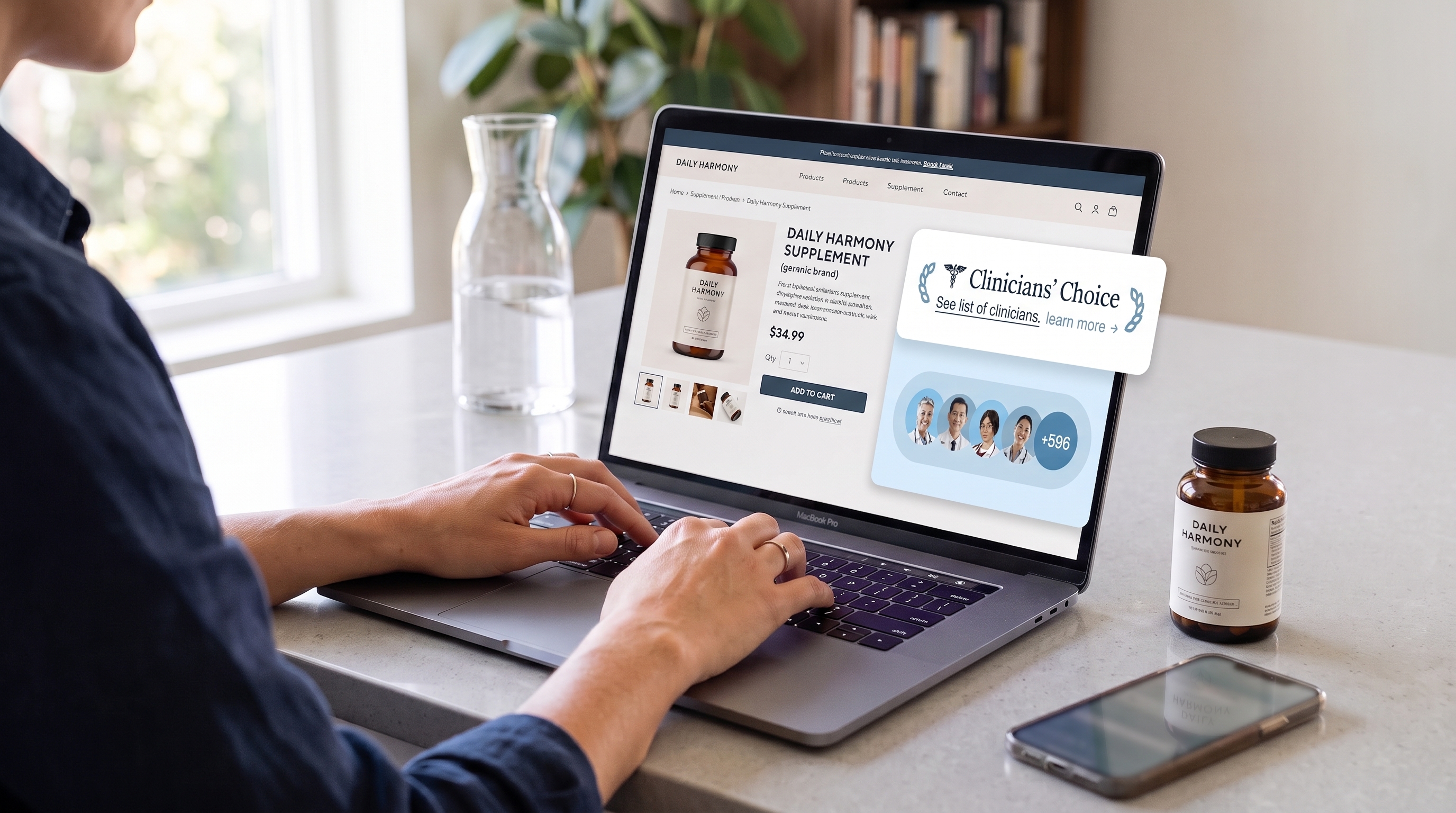
FrontrowMD is a clinician validation platform connecting DTC health, wellness, supplement, and beauty brands with 1,700+ licensed clinicians (MDs, NPs, PAs) who share, review, and endorse products — uncompensated — through patient-facing discount pages. The structural independence is the entire point: clinicians receive real product samples, write their own evaluations, and choose whether to endorse the product based on their professional judgment. No scripts. No compensation. No brand approval of the review content.
The reviews that move the needle are the ones that are structurally independent. That is not a marketing message. It is a structural requirement that 69.57% of your customers are explicitly demanding.
📊 Download the Full Report: The Trust Gap — How Independent Clinician Validation Drives Consumer Confidence and Purchase Decisions in Wellness. Based on an independent survey of 322 verified supplement buyers. Get the complete data here.
.png)

Frequently Asked Questions
