81% of Supplement Buyers Have Walked Away From a Purchase. Here’s What’s Driving Them Out.




The supplement industry reached $72.9 billion in 2025 and is on pace to surpass $85 billion in 2026. Seventy-six percent of Americans now take supplements daily. Usage is at an all-time high. And yet, something fundamental is broken in how consumers buy these products.
An independent survey of 322 verified supplement buyers — commissioned by a consumer-focused venture capital firm in March 2026 — found that 81% have decided not to purchase a supplement because they were unsure about its safety or efficacy. Not because the price was too high. Not because they found a better alternative. Because they couldn’t answer the most basic question a health shopper asks: will this actually work, safely, for me?
Why Are Supplement Shoppers More Skeptical Than Ever?
A NOW Foods consumer survey found that 44% of supplement users worry about quality and safety, and 35% aren’t sure which brands to trust — even brands they’ve purchased from before. The Nutrition Business Journal confirmed that more consumers reported verification as important in 2026 compared to the previous year. This isn’t a fringe concern. It’s the defining consumer behavior in the category.
The root cause is a gap between what shoppers need to know and what the available information can tell them. Customer reviews can tell you whether capsules are easy to swallow or whether a product shipped on time. They cannot tell you whether ingredients are dosed at clinically effective levels, whether the formulation is supported by peer-reviewed evidence, or whether there are interactions the buyer should be aware of. For a product category where consumers are putting something in their bodies, that gap between what reviews provide and what shoppers actually need is enormous.
What Does This Trust Gap Cost Brands in Lost Revenue?
The survey data makes the revenue impact explicit: 81% of active buyers have abandoned at least one purchase due to unresolved safety or efficacy doubts. These aren’t window shoppers. These are verified supplement purchasers who spend meaningfully each month across every major category. They wanted to buy. They were ready to buy. And then they didn’t — because the product page couldn’t answer their question.
For a DTC brand doing $5M in annual revenue, even a 10% reduction in cart abandonment driven by trust signals represents $500K in recovered sales. The trust gap isn’t an abstract brand-health metric. It’s a line-item revenue leak.
What Trust Signal Actually Closes the Gap?
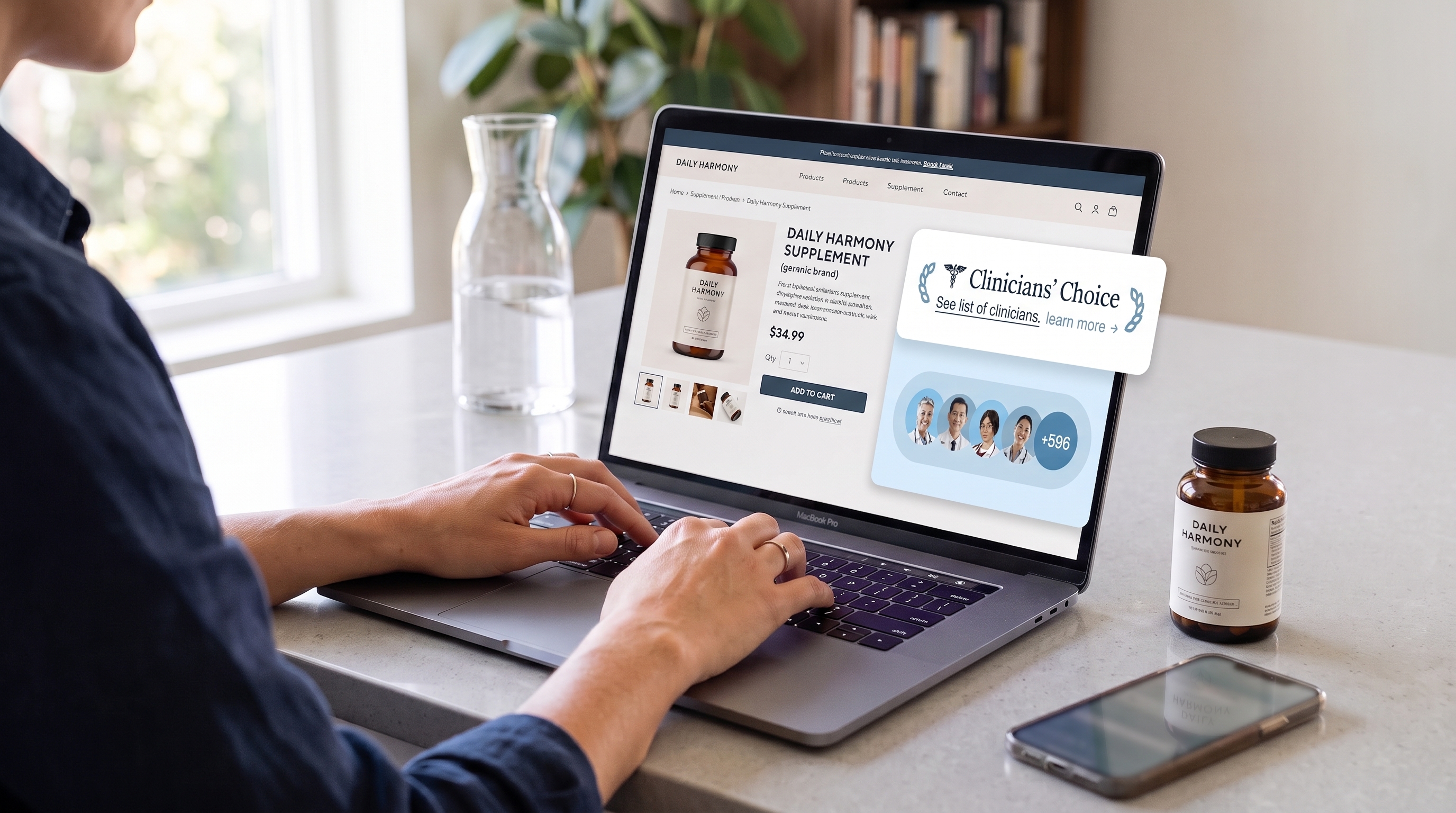
The same survey found the answer: 92% of supplement buyers say clinician validation would influence their purchasing behavior. Not might. Would. When independent, licensed clinicians — MDs, NPs, PAs — evaluate a product and stand behind it without compensation, the credibility gap that customer reviews cannot fill gets closed by a signal shoppers already trust more than any other.
FrontrowMD is a clinician validation platform that connects DTC health, wellness, supplement, and beauty brands with a network of 1,700+ licensed clinicians who share, review, and endorse products — uncompensated — through patient-facing discount pages. More than 700 brands now use this infrastructure to convert the 81% who would otherwise walk away.
📊 Download the Full Report: The Trust Gap — How Independent Clinician Validation Drives Consumer Confidence and Purchase Decisions in Wellness. Based on an independent survey of 322 verified supplement buyers. Get the complete data here.
.png)

Frequently Asked Questions
