Why Clinical Authority Converts 10x Better Than Influencer Marketing
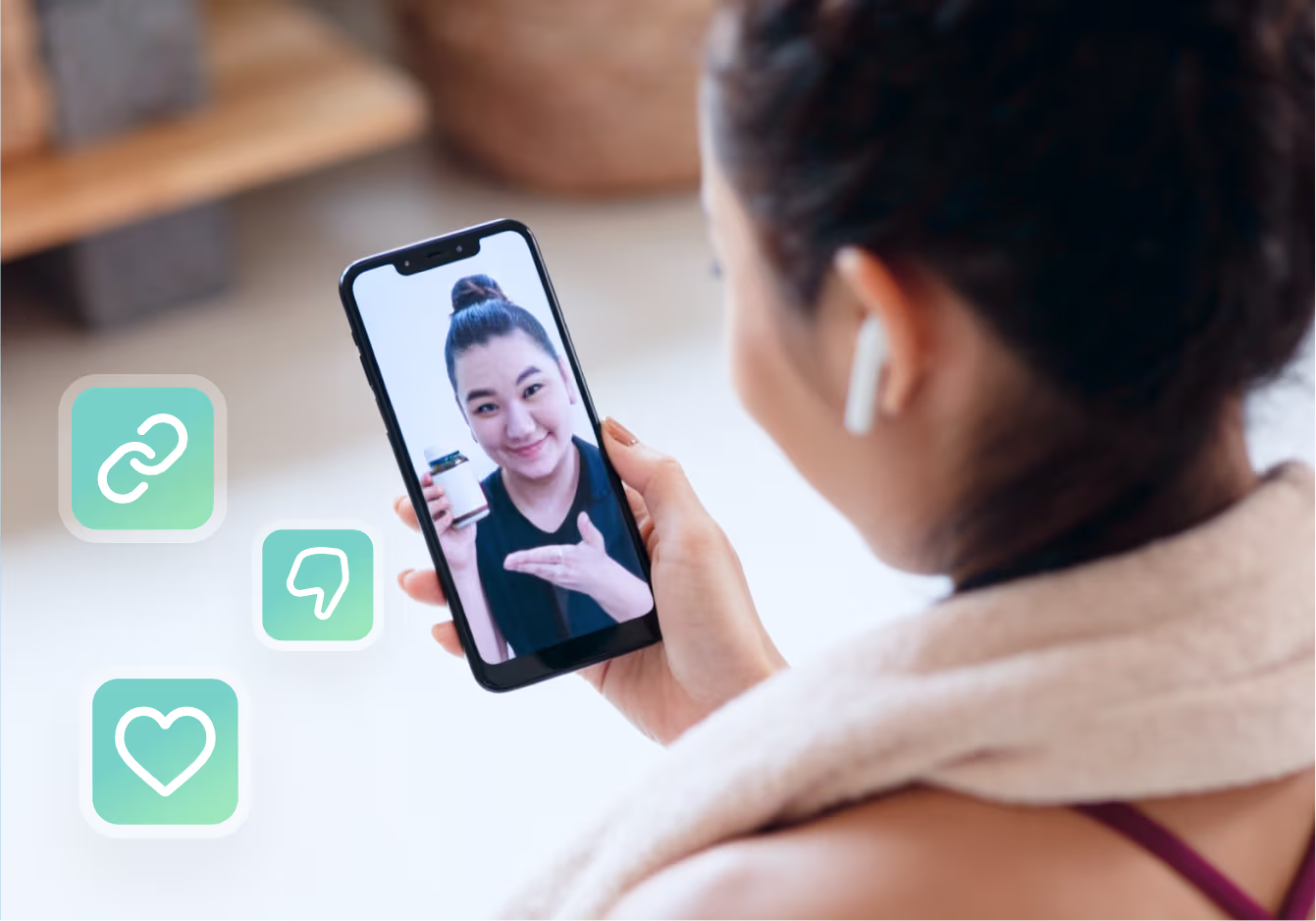



Why Clinician Authority Converts 3x Better Than Influencer Marketing
Your ad spend is up. Your creative is polished. Your conversion rates are flat.
If that pattern sounds familiar, you're not alone — and the problem isn't your budget. It's trust. Specifically, the growing gap between what wellness brands claim and what health shoppers are willing to believe.
McKinsey's Future of Wellness research documented a fundamental shift: the "vibe-based" marketing that powered the supplement and skincare boom is hitting a wall. Consumers have been exposed to too many bold claims backed by nothing. They're not just skeptical — they're filtering you out before you've finished the first three seconds of your ad.
The Health Washing Crisis Is a Conversion Problem
Health washing — marketing that positions a product as healthier or more effective than evidence supports — has trained a generation of shoppers to be defensive. McKinsey found that nearly one in three consumers now prioritize clinical effectiveness over clean or natural ingredient positioning. In supplement categories, this shift is even more pronounced.
If your brand looks like just another influencer-promoted wellness product, you're not just losing a sale. You're running into a trust ceiling that can't be bought through.
The 10x Conversion Advantage of Clinician Credibility
McKinsey's data draws a sharp line between what drives trust and what doesn't. 10 times the number of shoppers say that doctor recommendations are more valuable than influencers when making a health purchase online. Even 50% more shoppers found doctor recommendations to be more influential than customer reviews.
A 5-star review from a stranger provides social proof. A clinician's perspective on a product provides something different: clinical proof. For a shopper deciding whether to spend money on their health, that distinction determines whether they convert.
Clinician-backed content isn't just more credible — it's more persuasive at the precise moment it counts, and that’s why a separate McKinsey study even found that ~80% of people now only look for clinician-reviewed content online
The Gen Z and Millennial Opportunity
Younger shoppers present an interesting dynamic. McKinsey found that Gen Z is more likely to discover health brands through social platforms (23% consult social media for health information), but physicians remain their most trusted source. Their trust in traditional hospital systems is lower than older generations — but their appetite for credible, science-backed guidance is just as strong.
This creates a clear opportunity for DTC health brands: bring clinical authority directly to the digital channels where these shoppers already live. Don't choose between reach and credibility — build for both.
What This Means for Your Marketing Strategy
Moving from lifestyle-first to authority-first doesn't mean abandoning great creative. It means giving your creative the credibility layer that converts skeptical shoppers.
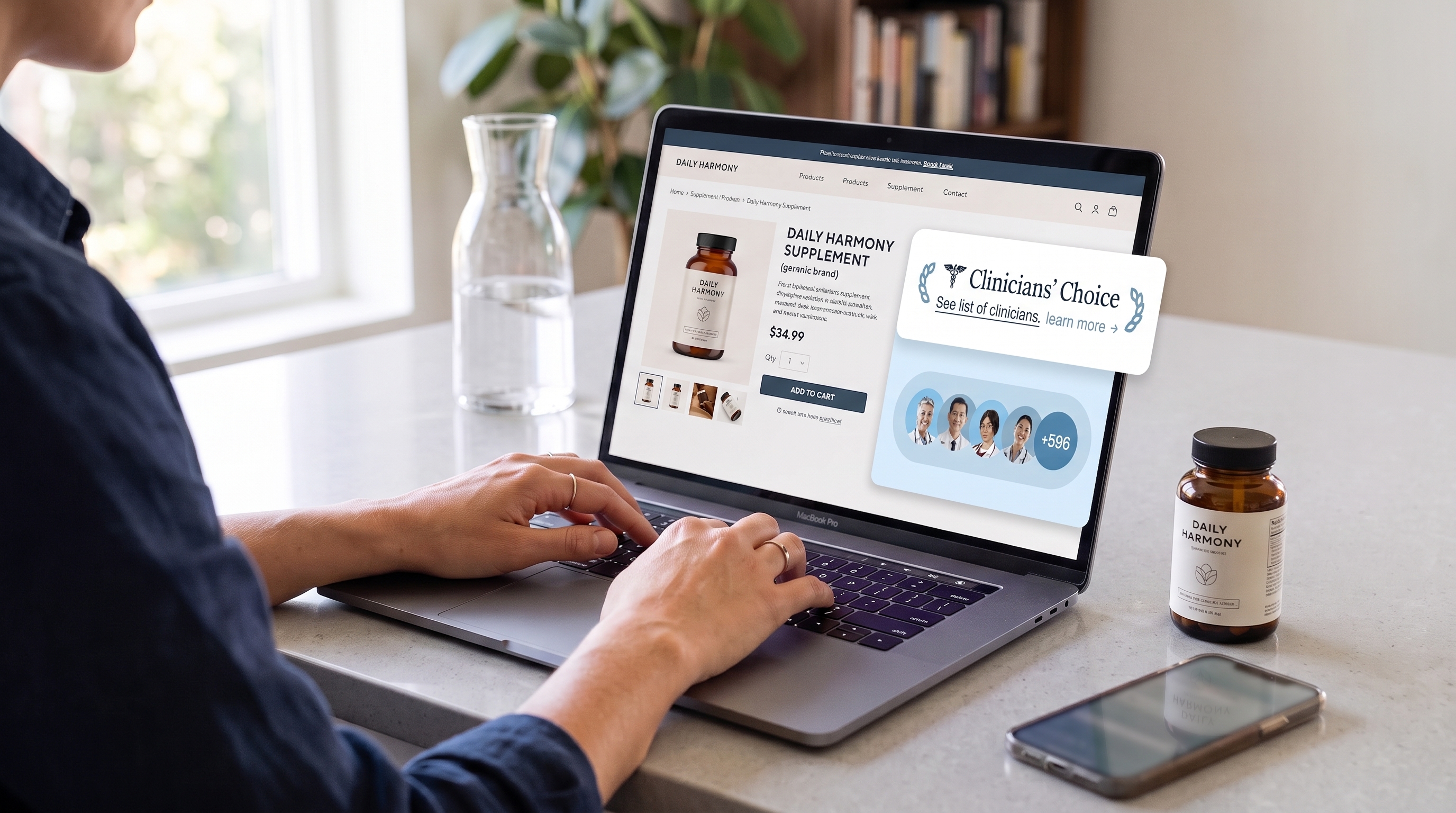
Feature your Medical Advisory Board where shoppers can see them — not buried in your About page. Swap lifestyle influencers for Healthcare Professionals (HCPs) who can speak to mechanism of action. Make clinical evidence visible above the fold, where shoppers are making their decision.
The $2 trillion wellness market will continue to grow. But the brands that win in 2026 and beyond are the ones that pair compelling creative with genuine clinical authority — because that combination is exactly what health shoppers have been waiting for.


Frequently Asked Questions
