The Female Health Buyer Holds 80% of Household Decisions. Here's How to Win Her.




The Female Health Buyer Holds 80% of Household Decisions. Here's How to Win Her.
In DTC health, there's one buyer who matters more than anyone else: the woman managing health decisions for her entire household.
She's often called the "Chief Medical Officer" of the home — and for good reason. Approximately 80% of all healthcare purchasing decisions in the United States are made by women. She's not just buying for herself. She's vetting supplements for her partner, choosing vitamins for her kids, and researching solutions for aging parents.
And she doesn't trust your ads – in fact, 95% of these ‘Chief Medical Officers’ of the household don’t trust your marketing, is what Rock Health found
The Trust Deficit Behind Declining Conversion Rates
Rock Health's research makes the scale of this problem clear: even as women are more digitally engaged in health than ever before, their skepticism of digital health marketing is at an all-time high.
This isn't a creative problem. It's a credibility problem. The female health buyer isn't looking for a better headline — she's looking for the same thing she looks for in a clinical setting: professional validation. She's been burned by health washing. She's seen too many "clean" labels that don't back up their claims. She needs to know that the person or platform she's trusting actually knows what they're talking about.
Why Clinicians Are the Original Trust Signal
McKinsey's wellness data reveals that nearly 80% of consumers are actively seeking clinician-reviewed health content online. This isn't a niche preference — it's a category-level shift that's reshaping how purchase decisions get made.
Before TikTok and Instagram became health discovery platforms, the clinician was the original trust proxy. That role hasn't gone away — it's just moved online. For the household CMO, seeing that a clinician has reviewed and stands behind a product removes the cognitive load of having to evaluate competing claims herself. It's not just reassurance; it's decision permission.
How to Build Content That Earns Her Trust
The brands winning with female health buyers have made one core shift: they've moved from lifestyle-first to authority-first. Every piece of content — blog posts, product pages, ad creative — carries the signal that clinical expertise is behind it.
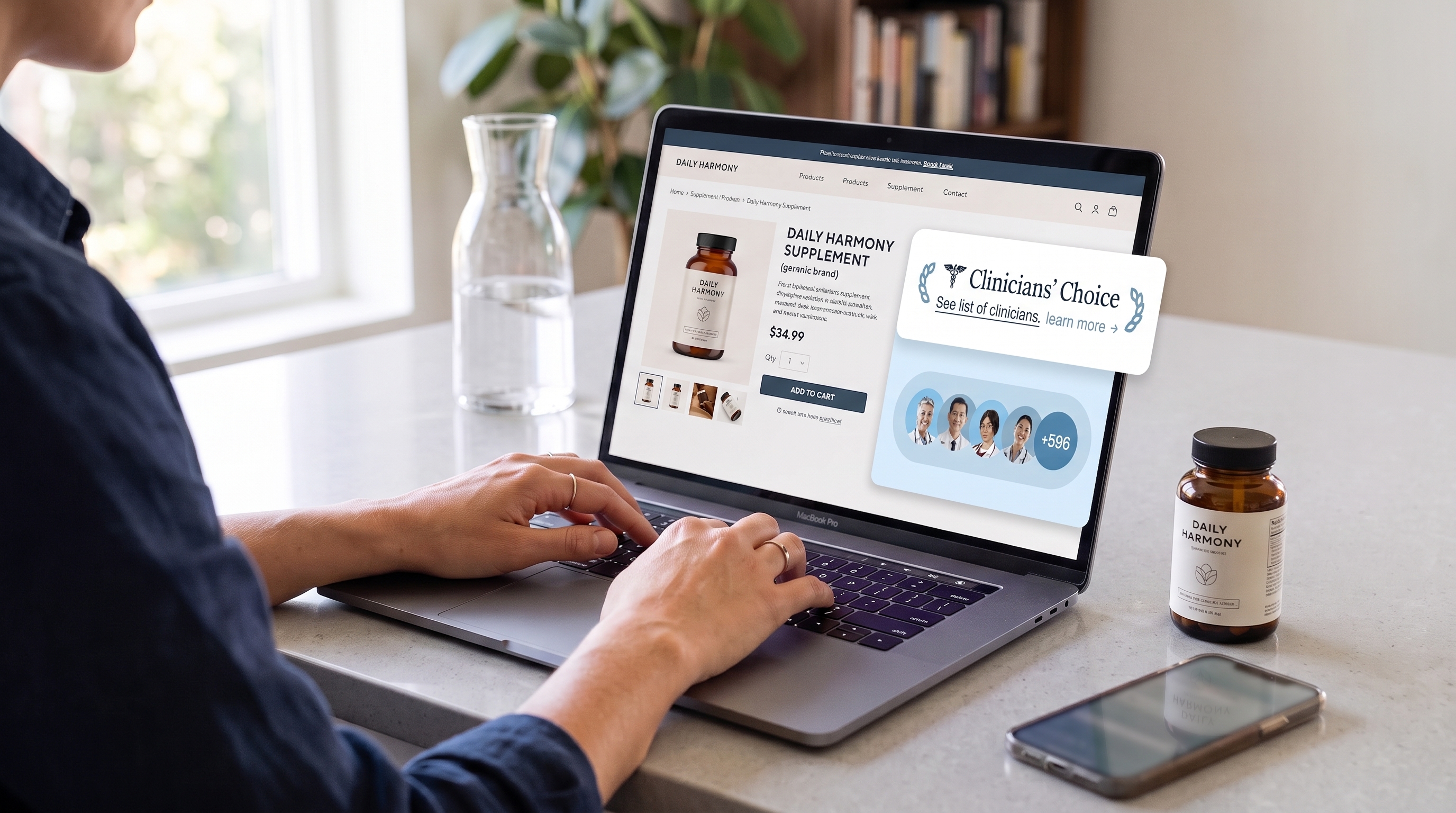
The Clinician's Choice badge isn't just a visual asset. For this buyer, it's the shortcut that answers the question she's always asking: "Can I trust this?" Making that signal visible and prominent — above the fold, in your creative, at the moment of decision — is what changes the conversion math.
Clinical empathy matters here too. The female health buyer is often carrying the mental weight of managing health for an entire household. When a clinician's perspective speaks directly to her specific concern — not just the product's efficacy, but the "why it matters for you" — that's the moment brand affinity is built.


Frequently Asked Questions
