How Wellness Brands can earn Clinicians' Unbiased Support
.png)



TL;DR
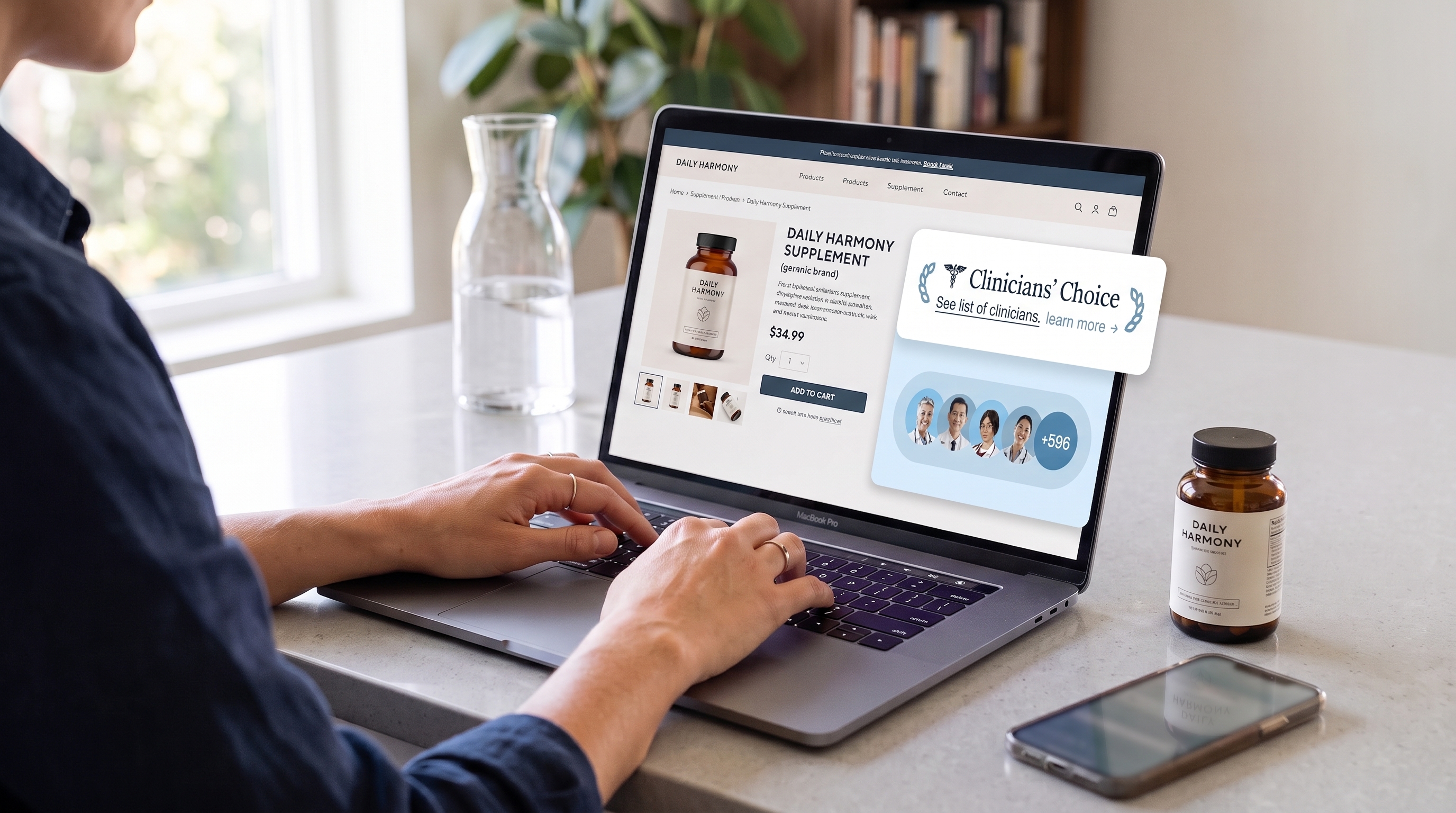
Shoppers want to see clinician validation, but not if it’s a paid endorsement. What brands should do is earn a clinician's voluntary, uncompensated decision to share a product with their own patients, by submitting the product for evaluation and letting a licensed clinician (MD, NP, or PA) decide independently whether it holds up. NielsenIQ's 2026 research found 62% of consumers are already wary of brand health claims, which means a scripted or paid "endorsement" (like an influencer) is likely to read as exactly what it is -- marketing with a clinician's name attached, rather than genuine clinical backing.
CTA: See how brands earn uncompensated clinician sharing -- Book a demo
Why paying for an “endorsement”is the wrong goal
The search behind this question usually means something more specific: how do I get a credible clinician voice behind my product without it looking like an ad? Framed that way, "endorsement" is actually the wrong target. An endorsement that's paid for, scripted, or assigned isn't credible to a skeptical shopper.
What actually gets a clinician to share your product
Clinicians who choose -- with no payment tied to the decision -- to share a product with their own patients are giving a fundamentally different signal than a paid spokesperson. That choice typically follows a specific path:
- The product is submitted for evaluation. Ingredient sourcing, dosing, and manufacturing documentation are reviewed before any clinician sees the product.
- A clinician evaluates it independently. They may request a sample, but their decision to share isn't required, and if they submit a negative review after receiving a free samples (disclosed to the shopper), then you’d still publish it
- The clinician opts in or out. A clinician who doesn't believe in the product simply doesn't share it -- which is exactly what makes the ones who do share it a meaningful signal.
The data behind why this matters
McKinsey's Future of Wellness research found clinical effectiveness has overtaken "clean ingredients" as wellness shoppers' top purchase driver -- they want an expert’s genuine assessment, not marketing copy dressed up as one. NielsenIQ's 2026 survey (19,000 consumers, 19 countries) found 82% of consumers want transparent labeling and 62% are wary of brand health claims specifically -- the exact skepticism a paid "endorsement" also triggers rather than resolves.


Frequently Asked Questions
