The Trust Problem Costing DTC Health Brands Millions
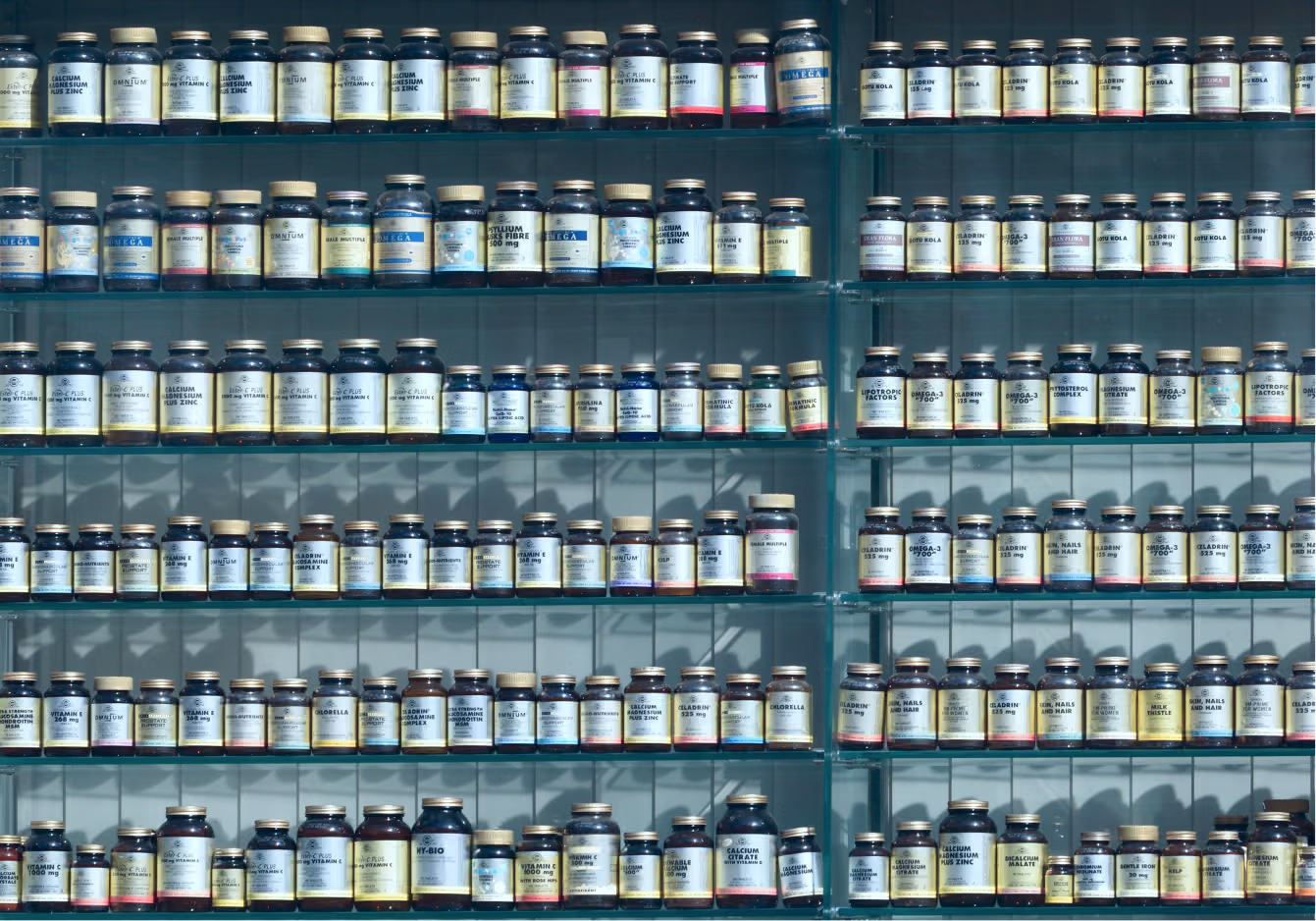



The Hidden Trust Problem Costing DTC Health Brands Millions
On my first day leading strategy at one of the largest DTC health companies, the CEO handed me a single directive: find a way to reduce customer acquisition cost.
That sounds like a metrics problem. It wasn't. After reviewing feedback from more than 1,000 health shoppers, the same theme surfaced again and again:
"I don't know what to trust when buying a health product online, on my own."
That uncertainty isn't just a shopper frustration. It's a conversion killer — and it's driving up CAC for every DTC health brand in the market.
Why Shoppers Freeze Before Buying Health Products Online
In most healthcare interactions, there's a trusted expert in the room — a clinician who helps guide decisions. But when a shopper finds a health product through a social ad or a Google search, that expert is nowhere to be found. .
What remains: flashy claims, ambiguous language, and wellness buzzwords. McKinsey's Future of Wellness research gives this a name — “health washing” — and documents how it's actively eroding shopper confidence. Consumers aren't just skeptical of individual brands. They've become skeptical of the entire category.
Every time a shopper encounters your ad, they're making three rapid-fire decisions: Is this product effective? Can I trust this brand? Is it worth the risk? If any answer is uncertain, the purchase doesn't happen.
What the Data Says About Trust and Health Purchasing
McKinsey's wellness research shows that consumers are now prioritizing clinically effective, science-backed solutions over lifestyle-forward marketing. The shift away from "clean" and "natural" buzzwords toward verifiable efficacy is accelerating — especially in supplements and OTC categories.
Meanwhile, Rock Health data confirms that while shoppers are more digitally active than ever, their skepticism is at an all-time high. Social proof in the form of reviews helps — but consumers demand volume before trusting them, and overly positive reviews can actually raise suspicion.
What does still convert? Clinician credibility. McKinsey found that healthcare providers remain the most trusted source of health information, even among younger consumers who primarily discover products through social media.
The Moment That Changed Everything
When I reviewed shopper feedback, the through line wasn't about packaging or ingredients. It was about authority. Shoppers wanted someone with medical expertise to validate that a product was worth their time, money, and health.
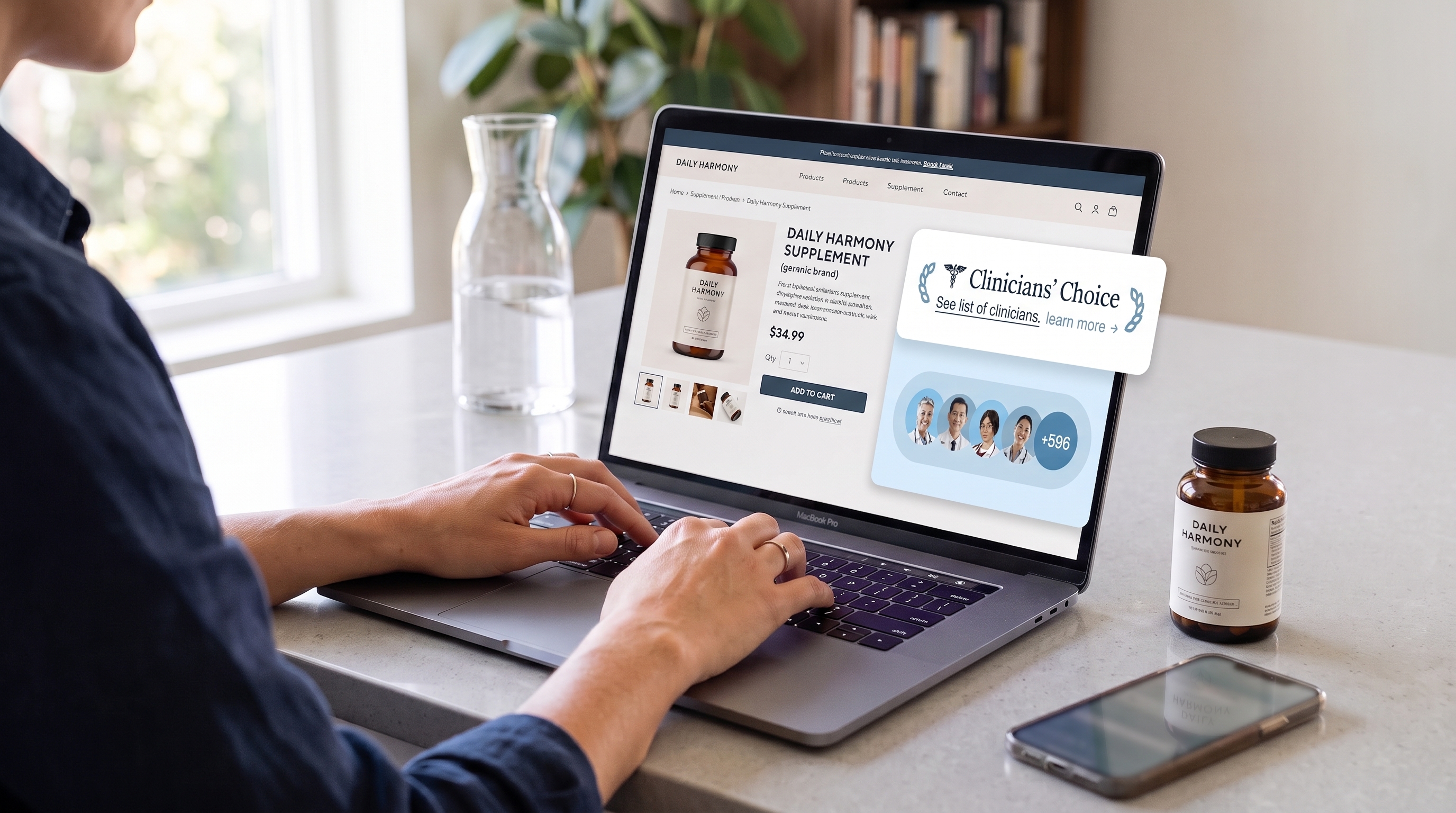
That insight became the founding idea behind FrontrowMD: clinician credibility, delivered at the moment shoppers need it most, at scale.
Clinical authority isn't a nice-to-have. It's the conversion variable that everything else depends on. When trust is missing, CAC goes up. When trust is present, revenue follows.
Closing the Gap
If you're a DTC health marketer, ask yourself: Are your claims backed by clinical expertise? Are trusted voices visible at critical moments in the buying journey?
This isn't a niche problem. It's industry-wide. The brands that close this gap first — and make clinician credibility a core part of their marketing infrastructure — are the ones that will grow.


Frequently Asked Questions
