One in Four Supplement Purchases Is Already Driven by a Doctor. Influencers? Under 5%.




There is a widespread assumption in the supplement industry that the path to conversion runs through customer reviews, influencer partnerships, and brand storytelling. An independent survey of 322 verified supplement buyers tells a completely different story.
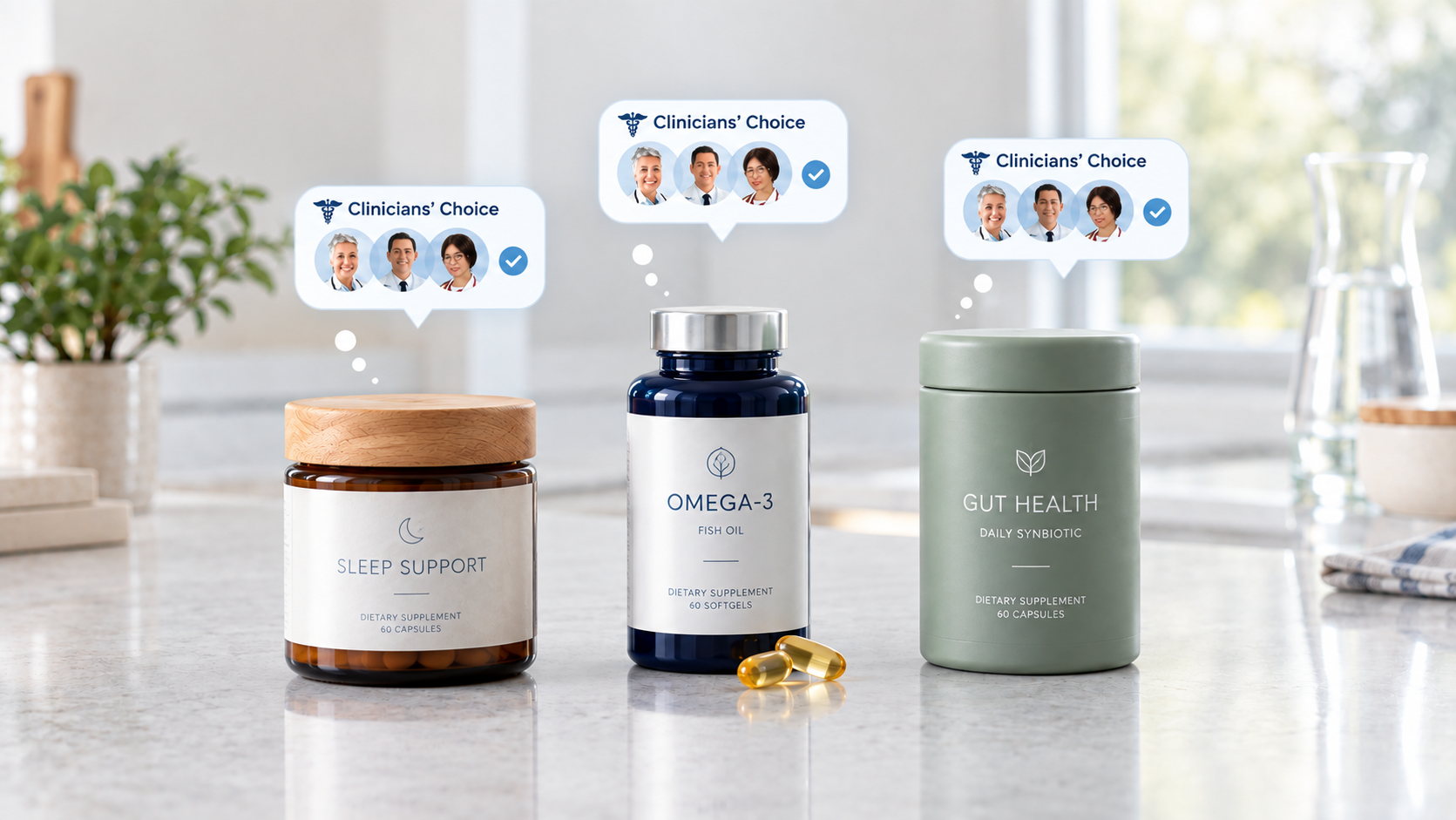
When consumers were asked to identify the single most influential factor in their most recent supplement purchase — not a hypothetical, but the last product they actually bought — the number-one answer was their doctor or healthcare provider. At 25.78%, clinician authority was the single most influential factor, ahead of personal recommendations from friends and family (18%), the buyer’s own ingredient research (16%), customer reviews (15%), and price or promotions (9%). Influencer endorsements came in under 5%, making them the least influential factor tested.
Why Is Clinician Authority Already Winning Without Any Infrastructure?
One in four supplement purchases is already being driven primarily by clinician authority — and it’s happening organically, through scattered, one-off conversations between individual consumers and their individual doctors. There is no infrastructure making this accessible at scale. There is no product page equivalent. Buyers found their way to a clinician's guidance through sheer chance, and it was still enough to be the top factor.
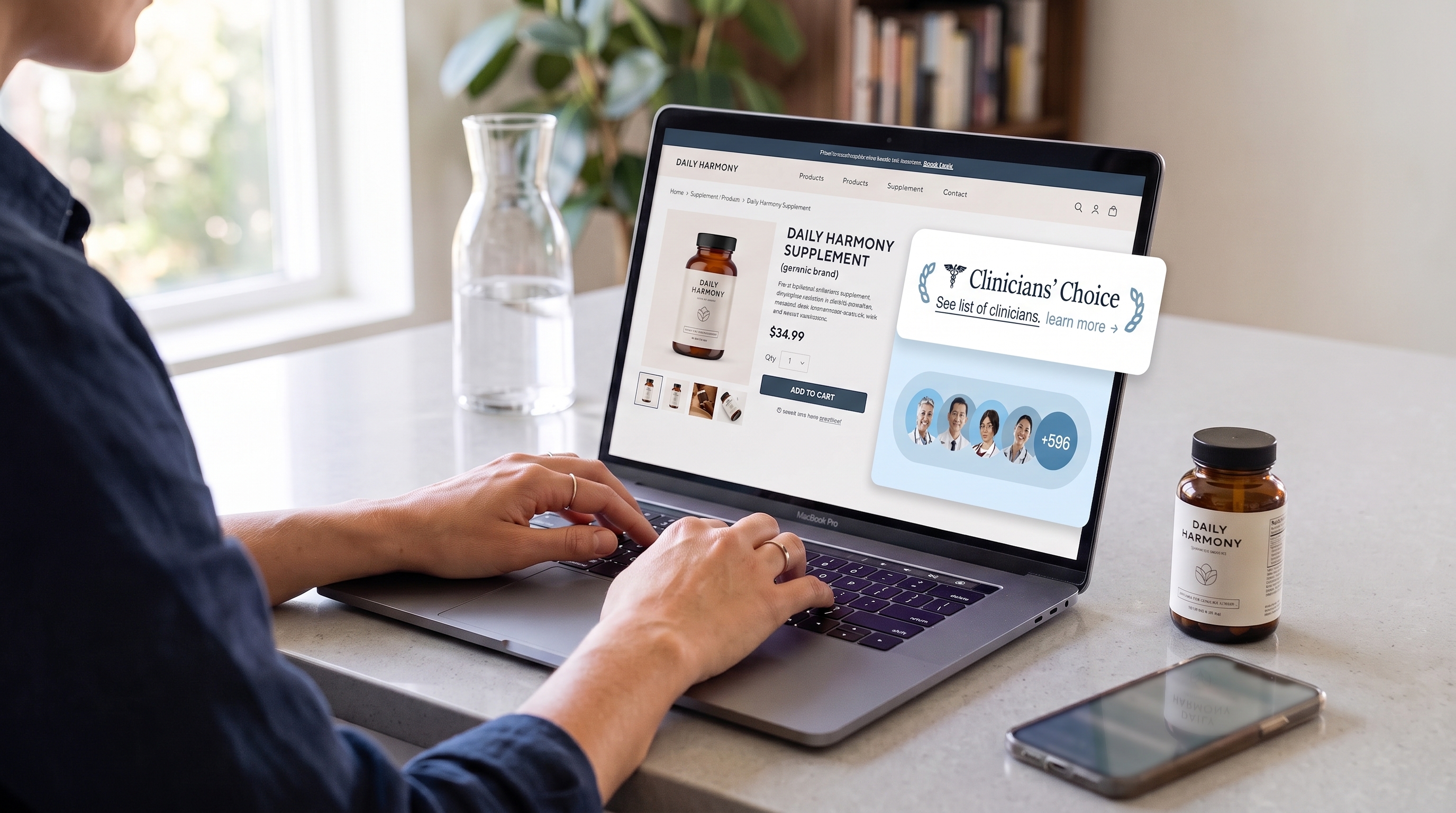
The implication is clear: if clinician authority is already the most powerful conversion lever when it’s hard to access, what happens when you make it available on every product page, for every shopper?
Why Do 72% of Shoppers Trust Clinician Reviews More Than Customer Reviews?
The survey asked shoppers directly: if a product page included a detailed review from a licensed physician who had independently evaluated the product’s ingredients, dosage, and evidence base, how would they compare it to a typical customer review? 72% said they would trust the clinician’s review more and would purchase clinician-backed products as a result.
When given a choice between two similar products at the same price — one reviewed by a licensed clinician and one with only customer reviews — nearly 70% said they would choose the clinician-reviewed product. Only 12% leaned toward the customer-reviewed one. This isn’t a marginal preference. This is a category where clinician validation changes which product gets put in the cart.
What Does This Mean for How Brands Allocate Marketing Spend?
The supplement industry spent billions on influencer marketing in 2025. TikTok Shop — TikTok Shop — where vitamins and supplements generated $784 million in sales in the year ending February 2026, per NielsenIQ — is built almost entirely on influencer-driven discovery. And yet, when you ask actual buyers what drove their last purchase, influencers ranked dead last.
That doesn’t mean influencer spend is wasted — it drives awareness and discovery. But the data is unambiguous about what drives the actual purchase: clinician authority. The brands allocating marketing budget toward scalable clinician validation — not as a replacement for awareness channels, but as the conversion layer beneath them — are aligning spend with what the data says actually works.
FrontrowMD is a clinician validation platform connecting DTC health, wellness, supplement, and beauty brands with 1,700+ licensed clinicians (MDs, NPs, PAs) who share, review, and endorse products — uncompensated — through patient-facing discount pages.
📊 Download the Full Report: The Trust Gap — How Independent Clinician Validation Drives Consumer Confidence and Purchase Decisions in Wellness. Based on an independent survey of 322 verified supplement buyers. Get the complete data here.

Frequently Asked Questions
